
Last updated: Oct 19, 2026 · By Ed Hodgson
Living in Southwest Florida offers sun and beach views, but coastal salt air and humidity challenge residential structural integrity. Protecting your Rotonda West home requires aggressive preventative maintenance on doors, exterior caulk, and window seals. Inspecting exterior caulking biannually prevents moisture intrusion that causes interior mold and drywall damage. Upgrading baseboards and using moisture-resistant paints protects high-humidity interior zones. Regular inspection of door hinges and sliding door tracks ensures smooth operation despite salt exposure. Good Guy Property Solutions helps local residents safeguard their homes against local climatic wear with specialized maintenance programs.
Why coastal homes wear out faster
Homes in Rotonda West, Englewood, Port Charlotte and the rest of Southwest Florida deal with three things at once: salt carried on the Gulf breeze, humidity that stays high for most of the year, and intense summer sun. Each one alone is manageable. Together they speed up corrosion on metal hardware, break down caulk and paint, and let moisture creep into places it should never reach.
The good news is that most of the damage we repair starts small. A cracked bead of caulk around a window, a sliding door that sticks a little more each month, or a bathroom fan that stopped pulling air are all cheap to fix early and expensive to ignore. A simple seasonal routine catches these problems before they turn into drywall, flooring or mold repairs.
Exterior caulk and window seals
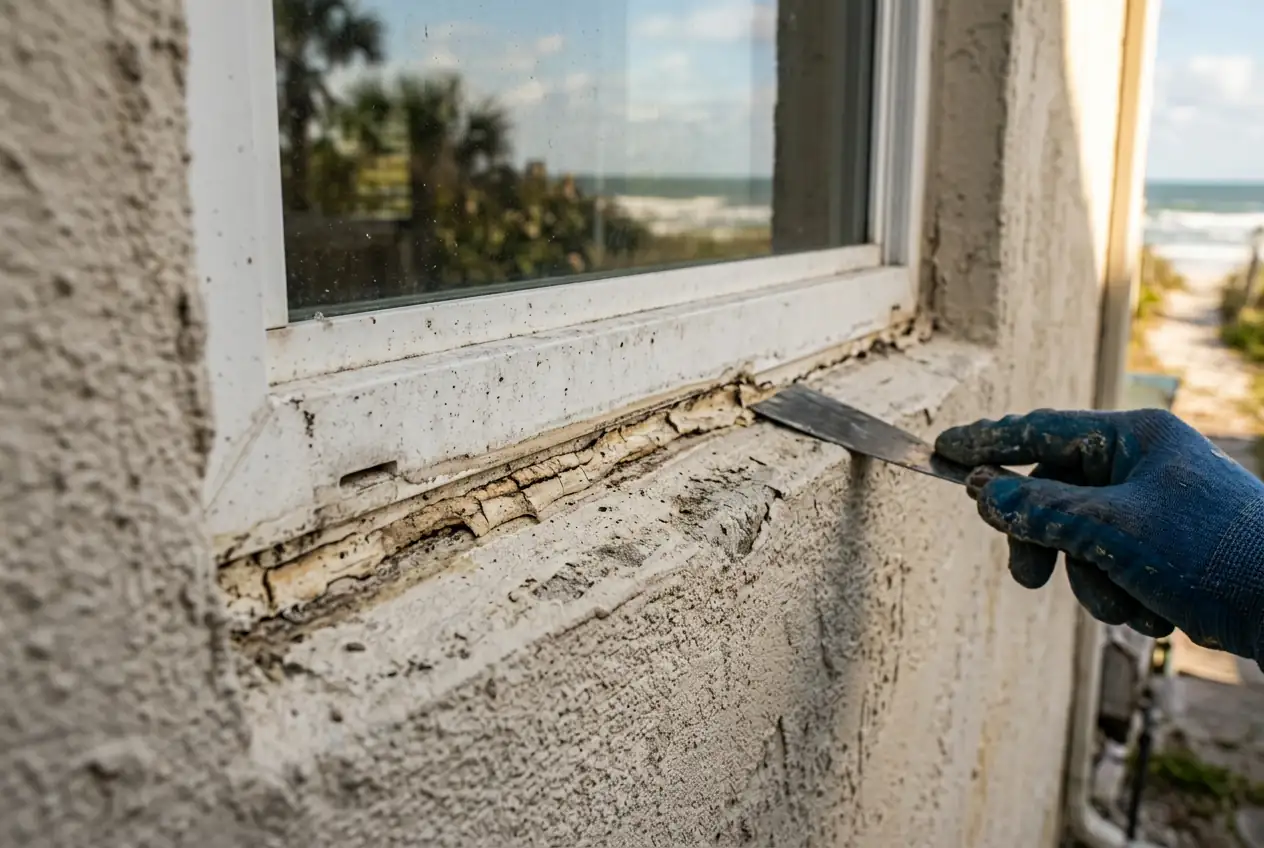
Caulk is the first line of defense against wind-driven rain. In our climate, exterior caulk often lasts only a few years before it shrinks, cracks or pulls away from the surface. Walk around your home twice a year — ideally before and after the rainy season — and look closely at windows, door frames, trim joints, hose bibs and anywhere pipes or wires pass through the wall.
If you can slide a fingernail into a gap, or the caulk feels hard and brittle, it is time to replace it. Remove the old material completely, clean and dry the joint, and use a high-quality exterior sealant rated for UV exposure. Painting over failed caulk only hides the problem for a season.
- Check window corners, where cracks usually start
- Look for staining or bubbling paint below windows — a sign water is getting behind the trim
- Inspect the seal where stucco meets door and window frames
- Re-seal around exterior light fixtures and outlets
Doors, hinges and sliding door tracks
Salt air is hard on metal. Hinges, strike plates, lock sets and sliding door rollers corrode faster here than almost anywhere inland. Squeaks, rust streaks and doors that no longer latch cleanly are early warnings.
Every few months, vacuum sand and debris out of sliding door tracks, wipe them with a damp cloth, and apply a dry silicone lubricant (avoid oily products that attract grit). Tighten loose hinge screws, and if a screw just spins, a longer screw into the framing usually solves it. If a slider still drags after cleaning, the rollers are likely worn and can often be replaced without replacing the whole door.
Controlling interior humidity
Indoor humidity is the hidden cause of many interior repairs: swollen baseboards, peeling bathroom paint, musty closets and soft drywall. Most homes do best with indoor humidity kept roughly between 40 and 60 percent. An inexpensive hygrometer will tell you where you stand.
Run bathroom exhaust fans during showers and for at least 15–20 minutes afterward, and make sure the fan actually vents outside rather than into the attic. Keep your air conditioning running at a steady temperature when you travel instead of turning it off, and change the A/C filter on schedule so the system can remove moisture properly.
- Use moisture-resistant paint in bathrooms, laundry rooms and kitchens
- Choose PVC or composite baseboards in areas that see water
- Leave closet doors cracked open in rarely used rooms
- Fix dripping faucets and running toilets promptly
Paint and exterior surfaces
Paint does more than look good — it protects wood trim, fascia and doors from sun and moisture. Look for chalky residue, fading, peeling and bare wood. Small areas can be scraped, primed and touched up; larger failures usually mean the surface needs proper preparation and a full recoat.
Gentle washing once or twice a year removes salt film and mildew that shorten the life of exterior paint. Avoid aiming a high-pressure stream directly at window seals, soffit vents or stucco cracks, where it can force water inside.
Preparing for storm season
Before June, confirm that shutters or panels are complete, labeled and that the hardware still operates. Test that doors and windows close and lock tightly, secure loose gutters and downspouts, and trim branches that hang over the roof. After a storm, walk the property again and look for new leaks, lifted trim and damaged screens so small damage is repaired before the next rain.
A simple seasonal checklist
Use this as a starting point and adjust it to your home:
- Spring: inspect and replace exterior caulk, clean slider tracks, check shutters
- Summer: monitor indoor humidity, clean bathroom fan covers, watch for new ceiling stains after storms
- Fall: post-storm walkthrough, touch up exterior paint, lubricate hinges and locks
- Winter: tackle interior projects — drywall, baseboards, fixture upgrades — while humidity is lower
When to call a professional
Many of these tasks are friendly for a confident homeowner. Call for help when you find soft or discolored drywall, recurring stains, doors that suddenly stop closing, or anything that involves ladders and heights you're not comfortable with. If a repair needs a licensed specialty trade, such as electrical or roofing work, we'll tell you clearly up front.
Good Guy Property Solutions provides maintenance and repairs for homeowners and property managers across Charlotte and Sarasota Counties. Call or request a free estimate and Ed will walk through your home's priorities with you.
Why Florida homeowners trust this advice
Every tip on this page comes from hands-on experience serving homes across Rotonda West, Englewood, Port Charlotte, and surrounding Southwest Florida communities. Coastal humidity, salt air, and seasonal storms create unique maintenance challenges — the guidance here is written specifically for local conditions.
- Licensed and insured work on every project
- Local knowledge of Charlotte and Sarasota County homes
- Practical, owner-tested repair techniques
- 24/7 availability for urgent maintenance
Need help with a repair?
Ed Hodgson personally handles repairs across Rotonda West and Southwest Florida.